As your child prepares for their inaugural comprehensive eye examination, you may be curious about what this process entails.
Many parents envision a brief check-up involving reading letters from a chart, having a light shone into their eyes, and departing with either a glasses prescription or the reassurance that “no glasses are needed.” While this basic evaluation can suffice for a straightforward vision check, it fails to capture the intricate ways in which a child utilises their eyesight for activities such as reading, writing, learning, and maintaining focus.
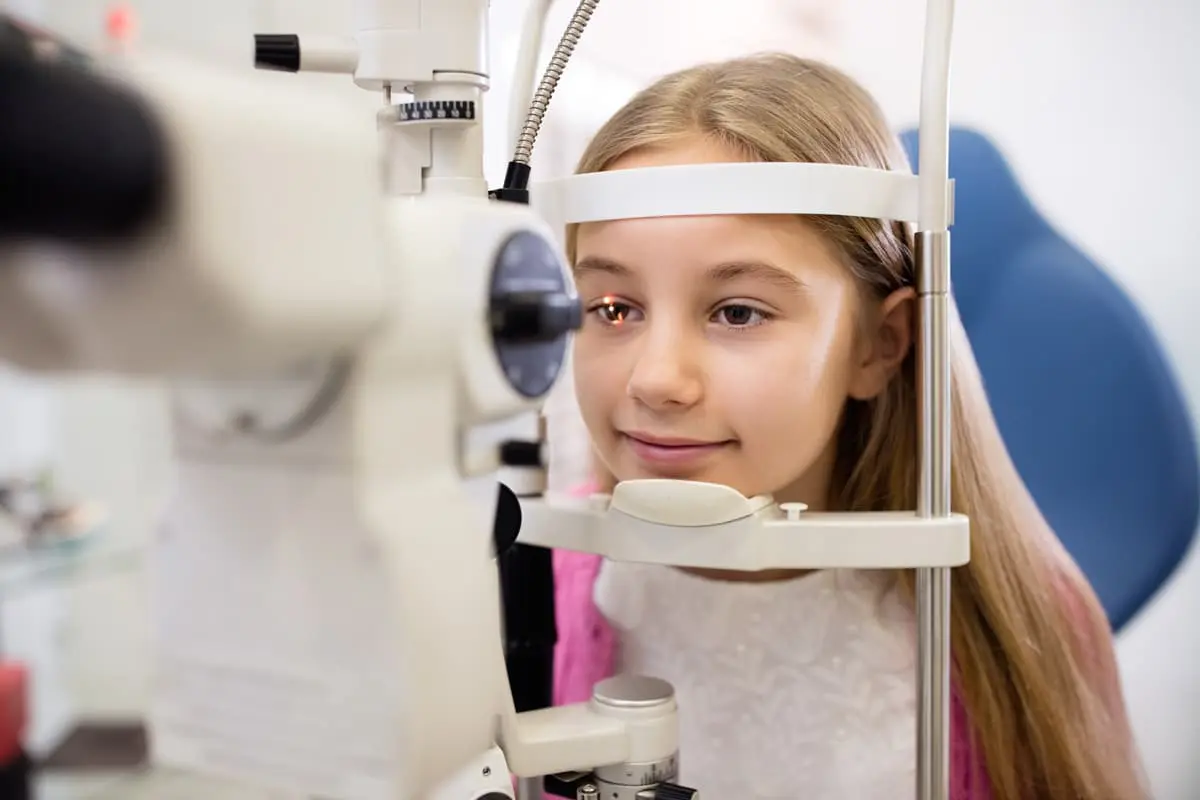
At Eyes by Design in Kincumber, our assessments for children’s vision extend far beyond the basics.
I focus not only on whether your child has clear vision but also on how their visual system operates. I evaluate how the eyes focus, coordinate, track across a page, maintain stability under stress, and whether visual processing skills are influencing their reading or academic performance. If your child’s midyear report raises concerns about concentration or reading skills, this assessment often becomes a vital next step.
Creating a Calm Atmosphere for Your Child’s Eye Examination
It is entirely normal for children to feel anxious when visiting an optometry office for the first time.
To help ease their worries, I take the time to slow down the appointment and engage directly with the child. I adjust the chair to their height, converse about their day, and cultivate a relaxed environment that feels welcoming rather than clinical.
The assessment is not something I impose on the child; it is a collaborative experience.
This collaborative approach is crucial. Children provide valuable insights through their comments, reactions, movements, levels of fatigue, and confidence during tasks. If a child appears uncomfortable, avoids specific activities, or suddenly loses self-assurance, they may be signalling something significant.
I encourage parents to remain in the room throughout the assessment. In fact, I prefer it this way. When parents are present, they can observe what I see, making the findings more transparent. Having both parents present also alleviates the pressure on one parent to remember all the essential details and relay them to the other.
Conducting Meaningful Discussions Before the Eye Testing Commences
Before we begin any testing, I prioritise a thorough discussion.
I aim to understand the complete context—not merely whether your child can see the board. I ask about their reading habits, spelling, handwriting, headaches, eye rubbing, issues with concentration, after-school fatigue, screen time, confidence levels, homework behaviour, and any feedback from teachers regarding classroom performance.
I also delve into their developmental history. Were important milestones achieved on time? Is there a history of middle ear infections or surgeries? Are their fine and gross motor skills adequately developed? Have they undergone previous eye examinations, and were any concerns noted or treatments recommended? Is there a family history of conditions such as lazy eye, high prescriptions, myopia, dyslexia, ADHD, migraines, or binocular vision problems?
This is not merely a checklist; it guides me in determining where to direct my clinical examination.
For instance, a child who struggles only with near tasks but excels outdoors or in sports may be facing a visual load issue. Likewise, a child who can read well for a few minutes but then becomes overwhelmed might have difficulties with focusing or binocular vision. A child struggling to copy from the board may encounter challenges with tracking, focus flexibility, or visual memory.
Children often express their symptoms in their own terms. They might say, “the words move,” “the page gets blurry,” “I feel tired,” “I dislike reading,” “my eyes are sore,” or “I lose my place.” Even when a child has difficulty articulating the problem, they can still provide us with valuable clues.
Key Areas Assessed During a Children’s Vision Evaluation
Every child is unique, so the assessment process may vary. Generally, I evaluate several critical areas.
Visual Acuity: Assessing Clarity of Vision in Each Eye
We begin by evaluating how clearly each eye can see at both distance and near range. Depending on your child’s age, I may utilise letters, numbers, pictures, or matching targets. Each eye undergoes individual testing, followed by a combined assessment.
This process enables us to identify whether one eye has superior vision compared to the other, whether your child requires a prescription, and if there are indications of amblyopia, commonly referred to as lazy eye. Notably, a child can adapt remarkably well with one eye compensating, which is why separate testing for each eye is essential.
Children do not need to recognise letters for an accurate eye test. For younger children, I can employ picture charts, matching activities, and objective assessments. A particularly effective technique is retinoscopy, which allows me to estimate a child’s prescription by shining a light into the eye and observing the reflex as various lenses are introduced. The child simply gazes at a target without needing to respond with “one or two” or read letters. We also incorporate instrument-based measurements when appropriate.
Understanding Prescription and Focusing Requirements
A prescription encompasses more than just clarity.
In children, I also evaluate how hard their focusing system needs to work. Some children can achieve clarity momentarily but only by exerting excessive effort. This strain can lead to fatigue, particularly during reading, writing, and screen time.
I assess whether the child can focus accurately, shift focus between distances, and maintain clear vision during close-up tasks. Parents may notice a short attention span, yet clinically, the underlying issue may be visual fatigue.

Binocular Vision: Evaluating Eye Coordination
Binocular vision is a crucial element of a child’s vision assessment.
For effective reading, both eyes must focus on the same point, maintain focus at the same distance, and produce a single, stable image consistently—not just for brief moments.
I assess how well the eyes converge for nearby tasks, the stability of that convergence, the effort required, and how quickly the system recovers under stress.
If the eyes do not work together effectively, a child may experience blurriness, double vision, headaches, moving text, eye strain, or difficulty concentrating on close tasks. Binocular vision issues are often overlooked in standard eye tests that solely evaluate clarity on a chart. This topic is elaborated further in discussions on binocular vision dysfunction in children.
Tracking Evaluation: Assessing Movement Across a Page
Effective reading necessitates precise eye movements. The eyes perform a series of rapid jumps followed by brief pauses to absorb information. At the end of a line, they must accurately leap to the beginning of the next line.
If these movements lack accuracy, reading efficiency declines. A child may skip words, overlook lines, repeat lines, lose their place, rely heavily on a finger for tracking, or appear to guess words. I evaluate both smooth tracking and rapid eye jumps.
Assessing Depth Perception, Colour Vision, and Overall Eye Health
Depth perception indicates how well both eyes collaborate to provide the brain with a three-dimensional view of the surroundings. This ability is vital for activities such as sports, coordination, navigating stairs, and estimating distances.
I also evaluate colour vision. Colour vision deficiencies are more prevalent among boys and can go unnoticed for years. While this condition typically does not hinder a child’s learning, it may affect their ability to interpret colour-coded materials in the classroom.
A thorough children’s vision assessment includes an examination of overall eye health. I assess the front structures of the eye, the internal components, retina, and optic nerve to ensure there are no signs necessitating further examination or referral.
Exploring Visual Processing Skills
When necessary, especially if there are concerns regarding reading, writing, copying, or academic performance, I also assess visual processing skills.
These skills encompass the brain’s ability to interpret and organise visual information. Depending on the child’s age and specific concerns, this assessment may cover visual discrimination, visual memory, visual sequential memory, figure-ground skills, and other processing tasks.
A child may possess clear vision yet still encounter challenges with visual processing.
How Does the Assessment Process Vary for Younger Children?
For preschool-aged children, the appointment is generally more flexible.
A three or four-year-old is not expected to maintain the same level of stillness as a teenager. I adjust the assessment to cater to the child’s age, attention span, and comfort level. We may incorporate pictures, matching games, lights, simple targets, and objective techniques that do not rely on verbal responses.
The primary aim at this stage is to establish a baseline, identify significant prescriptions, check for eye turns, assess amblyopia risk, and ensure visual development is progressing as anticipated.
What to Expect at the Conclusion of the Appointment?
The explanation provided at the end of the appointment is one of the most crucial components of the visit.
I want parents to leave with a clear understanding of the prescription or recommendations. It is essential for them to comprehend what I discovered, why it matters, and what the next steps entail.
I will clarify whether your child’s vision is developing as expected, whether glasses are necessary, whether binocular vision or focusing issues are relevant, and whether further evaluations or treatments are suggested.
Whenever possible, I demonstrate my findings during the appointment. For instance, if a child’s eyes struggle to converge, I can illustrate that. If a trial lens enhances comfort or fluency, parents can often observe the improvement firsthand.

What You Need to Know If Your Child Requires Glasses or Vision Therapy
If your child needs glasses, I will provide a thorough explanation of the prescription and advise when they should be worn. Some children require glasses all the time, others only for school, and some primarily for reading and close work. Certain prescriptions are designed mainly to alleviate visual strain rather than solely enhance clarity.
Vision therapy may be recommended if glasses alone do not fully resolve the issues, particularly for specific binocular vision, focusing, or eye movement challenges.
Vision therapy is a structured programme aimed at improving the coordination between the eyes and the brain. It requires commitment and is suggested only when the findings indicate its necessity. It is not suitable for every child and should not be regarded as a universal solution for learning difficulties.
What If No Significant Issues Are Identified During the Assessment?
Occasionally, the assessment may reveal that vision is not the primary concern. This information remains valuable.
If vision is not significantly contributing to the issues, parents can proceed with greater confidence to investigate other areas. Depending on the child’s symptoms, this may involve consulting a speech pathologist, occupational therapist, educational psychologist, general practitioner, or paediatrician.
The objective is not to attribute every challenge to vision but to conduct a comprehensive assessment to ensure any vision-related concerns are either addressed or ruled out.
Common Inquiries Regarding Children’s Vision Assessments
What is the Duration of a Children’s Eye Test at Eyes by Design?
A comprehensive children’s vision assessment typically lasts around 45 minutes. This timeframe encompasses testing and time at the end to discuss the findings with parents.
At What Age Should My Child Have Their First Eye Examination?
A first comprehensive assessment is generally recommended around three years of age or sooner if concerns arise. Children do not need to recognise letters to participate in testing.
Is a Referral Necessary for the Appointment?
No referral is needed. Parents can directly schedule an appointment with Eyes by Design.
Should Both Parents Attend the Appointment?
If possible, having both parents present is beneficial, particularly when the appointment addresses school, reading, or learning challenges. This ensures both parents receive the findings and recommendations directly.
Will the Assessment Be Uncomfortable for My Child?
No, a children’s vision assessment is completely painless. Most of the appointment involves looking at targets, responding to simple questions, following lights or pictures, and completing age-appropriate visual tasks.
Is It Time to Arrange Your Child’s Vision Assessment?
If your child is experiencing difficulties with reading, concentration, headaches, schoolwork, or visual comfort, a comprehensive children’s vision assessment is a sensible first step.
At Eyes by Design in Kincumber, we evaluate far more than just whether your child can see the board. We analyse how their vision supports the daily activities they engage in—reading, writing, copying, learning, participating in sports, and playing.
Contact Eyes by Design at 4369 8169 or schedule your appointment online through our website.
Original Article First Published At: What to Expect During a Children’s Vision Assessment at Eyes by Design
The Article: Children’s Vision Assessment: What to Expect at Eyes by Design first appeared on https://writebuff.com
The Article Children’s Vision Assessment at Eyes by Design: What to Know Was Found On https://limitsofstrategy.com
No responses yet