Last Updated on July 1, 2026 by David
What Causes Slate Tiles in Barrow in Furness to Lose Their Shine Despite Regular Care?
The slate tiles in Barrow in Furness have reached a point where routine mopping yields no discernible improvements. Homeowners expect regular cleaning to maintain the vibrancy of the surface, yet the floor remains persistently dull, grey, and visually exhausted, despite multiple cleaning attempts. The impact of foot traffic has gradually altered how the stone reflects light, diminishing the natural variations that once contributed to the tiles’ character.
Each cleaning session has only provided a temporary lift, with the original dullness returning shortly thereafter. The kitchen typically shows the first signs of wear, followed by the dining areas. This has resulted in a surface that no longer responds reliably to basic maintenance, leading to mounting frustration as efforts do not produce satisfactory results.
To exacerbate the situation, grout lines have retained darker residues that sharply contrast with the faded slate, further obscuring the natural variations across the surface. These factors have combined to create a patchy, uneven appearance throughout the floor. Even after cleaning, the contrast persists, making it seem as though the floor is perpetually in need of further attention.
How Do Deteriorated Slate, Surface Pits, and Grimy Grout Render Standard Cleaning Ineffective?
Worn slate surfaces in kitchens across Barrow in Furness often develop small open pits that standard mopping cannot adequately address, causing dirt to remain trapped even after cleaning. These pits capture fine debris within the riven surface texture, where the naturally split layers of stone do not behave like smooth tiles. Over time, this accumulated dirt, along with darkening grout, results in a persistent grey hue across the entire floor.
A thorough deep clean using a high-alkaline cleaner effectively breaks down organic soil and loosens residues that regular detergents often leave behind in porous slate. This process depends on an alkaline pH to detach contamination before it can be extracted. a crucial step is the rinse. If residues remain, they will attract more dirt, making removal just as essential as the cleaning process itself.
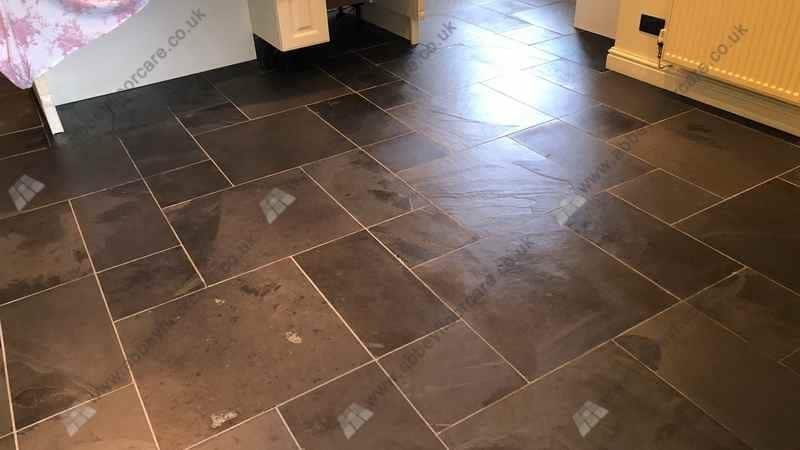
In some instances, structural issues such as Filler Collapse worsen the problem. Insufficient factory filler can create small voids that trap additional dirt and moisture. This alteration in surface behaviour impacts daily usability since the floor no longer functions like a stable, sealed surface. Coupled with the riven structure of the slate, these voids allow soil to settle deeper than conventional cleaning can effectively manage.
To thoroughly eliminate embedded contamination, controlled agitation followed by multiple extraction cycles using a wet vacuum system designed for slurry removal is essential. This method prevents dirty water from re-entering grout lines or surface pits during the drying process. For further insights into how these floors lose clarity over time, refer to this slate cleaning guidance resource, which details the evolution of surface structure and soil interaction in domestic settings.
What Transformations Occur After Successful Cleaning of Slate Floors?
Once the slate in Barrow in Furness began to respond consistently to deep cleaning, the focus shifted to achieving uniformity. Water spread evenly across the floor, and drying patterns became balanced. Techniques involving pressurised rinsing and capturing were employed to flush out remaining residues from the surface, while a wet vacuum and slurry extractor removed suspended contamination before it could settle again. This combination often confirmed that the floor no longer retained compacted soil.
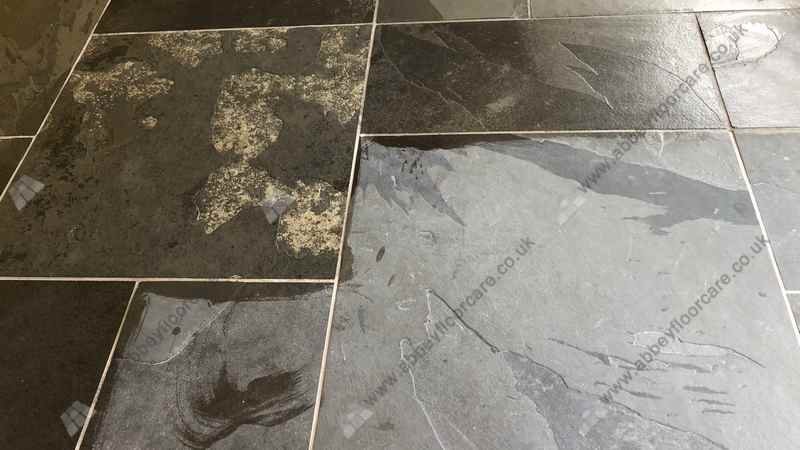
The application of a topical urethane sealer subsequently enhanced the surface’s performance during everyday use. This protective layer significantly reduced soil adhesion to the tiles, improving surface consistency and slowing down the rate at which dirt became visually embedded, especially in high-traffic kitchen areas. Essentially, the floor stopped attracting soil as it had in the past during regular use.
Compared to its initial state, routine maintenance became much simpler. Dirt remained on the surface rather than infiltrating pits or grout lines, making light mopping sufficient for upkeep. A more detailed explanation of the long-term behaviour of sealed slate is available in the slate care and behaviour overview, which outlines how maintenance routines should adapt following restoration.
When Should You Move Beyond Standard Mopping for Slate Floor Care?
There comes a point when repeated mopping in Barrow in Furness fails to improve the appearance of slate floors, as the stone no longer releases soil through standard cleaning methods. Contamination remains beyond the effective reach of water and detergent, leading to a persistent dull finish despite frequent cleaning. At this stage, continuing the same efforts typically perpetuates the issue rather than resolving it.
Specialist cleaning and a Tailored Maintenance Handover are essential to reset the surface’s behaviour after restoration, ensuring an appropriate balance between cleaning methods and protection moving forward. This approach also reduces the risk of rapid re-soiling. Additional guidance on maintaining that balance can be found in the slate maintenance behaviour guide, which explains how routines should adapt following proper restoration.
Key Products Highlighted in This Slate Cleaning Guide

David Allen — Abbey Floor Care
David Allen possesses over 30 years of experience in restoring natural stone floors across the UK, including slate cleaning projects in Barrow in Furness, where significant soil buildup and surface dullness were addressed using controlled cleaning and sealing techniques. This case study illustrates his method for diagnosing wear patterns and restoring practical cleanability to residential slate installations.
The Article Slate Floor In Barrow Looks Permanently Grey Despite Cleaning first found on https://www.abbeyfloorcare.co.uk
The Article Slate Floor in Barrow Remains Grey After Cleaning Efforts appeared first on https://fabritec.org
The Article Slate Floor in Barrow Stays Grey Despite Cleaning Attempts Was Found On https://limitsofstrategy.com
No responses yet