Last Updated on June 6, 2026 by David
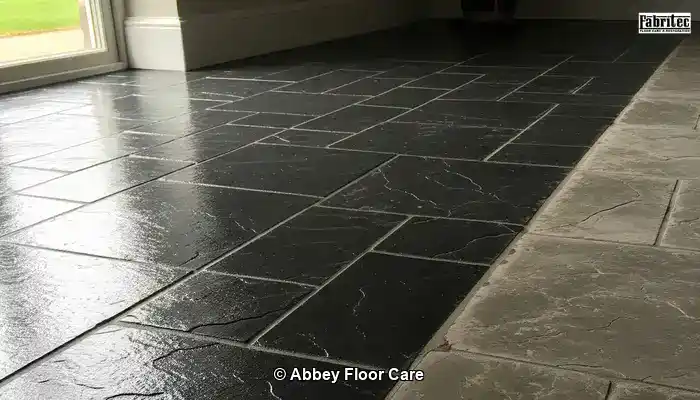
When you observe faded, uneven, or patchy slate on your floor, it usually indicates alterations in surface properties, moisture absorption, deterioration of sealers, or variations inherent to the stone itself. This issue seldom arises solely from surface dirt. Slate, a porous and fine-grained rock, exhibits colour changes influenced by factors like foot traffic, texture, moisture interaction, residue from cleaning products, and the stone’s natural density. These variables dictate whether the slate maintains its vibrancy, darkens, or begins to lose its colour after cleaning.
Understanding the reasons behind colour changes becomes easier when you view the floor as a complex material system rather than merely a surface needing a more robust cleaning solution.
What Are the Key Factors Behind Colour Changes, Fading, or Unevenness in Slate Floors Over Time?
If your slate floor appears faded, uneven, or patchy, the initial task is to differentiate between normal wear and more severe changes affecting the surface. A floor can show wear for numerous reasons: the original colour may have faded due to foot traffic, old sealers can degrade unevenly, or certain areas might absorb moisture and dirt more readily than others. Although these symptoms may seem similar at first glance, they point to different underlying issues.
Colour loss on slate often manifests first in high-traffic regions. Hallways, pathways in kitchens, doorways, and spaces surrounding tables typically exhibit changes first, as grit trapped in footwear gradually wears down the surface. While the overall integrity of the floor may remain intact, these frequently traversed areas may look paler, flatter, or greyer compared to quieter edges.
Faded areas can easily be mistaken for ingrained dirt. Often, the surface has been abraded by foot traffic, stripping away colour alongside dirt. This is not simply dirt that can be scrubbed away. While more vigorous cleaning methods may remove loose dirt, they do not restore the colour lost from the stone’s surface.
Uneven colour may also arise from old sealers wearing off at different rates. Many slate floors in the UK accumulate acrylic sealer, particularly near tile edges, skirting boards, and corners that experience less foot traffic. The centre of the room may appear dry and flat, while the edges remain dark, glossy, or slightly yellowed due to accumulated layers of old finish.
A patchy appearance can develop even when cleaning the entire floor at once. One tile may darken rapidly while another remains pale due to the natural variance in absorbency across different tiles. This inherent colour variation contributes to the charm of slate, and riven slate often showcases more pronounced differences due to ridges, troughs, and exposed mineral layers reflecting light in unique ways.
Older slate floors might exhibit multiple visual signs simultaneously. Pale walking paths, darker tile edges, dull patches near mats, white mineral marks in damp areas, and discoloured grout lines can all exist on the same surface. It is crucial to note not just that the floor appears faded; observing where the fading occurs, the distinctiveness of the changes, and whether they correlate with usage, moisture, sunlight, or patterns from old coatings is essential.
Moisture-related colour changes typically appear differently than wear-related fading. Wet slate generally darkens rather than fades; however, repeated wetting and drying can leave surfaces looking blotchy, cloudy, or uneven. Kitchens, utility rooms, entrances, and older ground floors frequently experience these alterations, as water, cleaning residues, and outdoor grit converge.
Absorbency serves as a significant indicator when a slate floor loses its uniform appearance. Unsealed or poorly sealed tiles can darken considerably after mopping, while well-protected areas maintain their original colour. A professionally restored and adequately sealed floor is much easier to clean and maintain than a worn or improperly treated floor, as the surface no longer absorbs moisture and dirt as readily.
Surface scratches often manifest as a dull veil rather than distinct lines. Pet claws, chair legs, grit, and abrasive pads can create fine marks that scatter light across the tile surface. On smooth slate, this may appear as haze, while on riven slate, it often looks like pale highlights on raised ridges.
Sunlight can complicate colour interpretation. Areas exposed to sunlight near patio doors, roof lights, and large kitchen windows may fade differently than shaded zones under furniture or rugs. This contrast can create the impression of inadequate cleaning, even when the actual pattern is dictated by UV exposure and protected areas.
The condition of the grout can also influence how slate tiles appear, causing them to seem more faded than they are. Contaminated wash water settles into porous joints, causing the grout to darken while the tile surface appears paler in contrast. the floor loses definition in one area while gaining excessive contrast in another, resulting in a patchy overall appearance.
Loose edges, cracks, chips, and flaking can further alter interpretation. A floor with lifting layers or damaged edges is not merely exhibiting surface dullness; it requires a more thorough evaluation before concluding that cleaning, sealing, or coating will suffice. Localised repair issues, such as broken edges and signs of movement, should be addressed separately in slate floor repair diagnosis, as structural concerns should not be mistaken for routine fading.
Riven slate can appear particularly uneven due to its natural split surface reflecting light in various directions. A ridge may seem pale and dry, while the trough beside it looks dark, despite both being part of the same tile. This visual variation is a characteristic of the stone; however, excessive wear can accentuate it, making the floor appear more worn than naturally varied.
Welsh slate typically retains its colour and surface detail longer, as it is generally denser and less absorbent than many imported slates. Softer varieties, such as Indian, Chinese, or variable Brazilian slate, may show signs of marking, absorbency, and colour changes sooner, particularly in busy kitchens or entryways. The same family routine can yield vastly different results on two floors, both classified as slate.
Old sealers can worsen the appearance of a worn floor by trapping soil and moisture unevenly. Edges, grout lines, and low areas may retain degraded coatings, while the main traffic route has already lost its protective layer. This results in a floor that appears faded in the centre, dirty at the edges, and patchy after every clean.
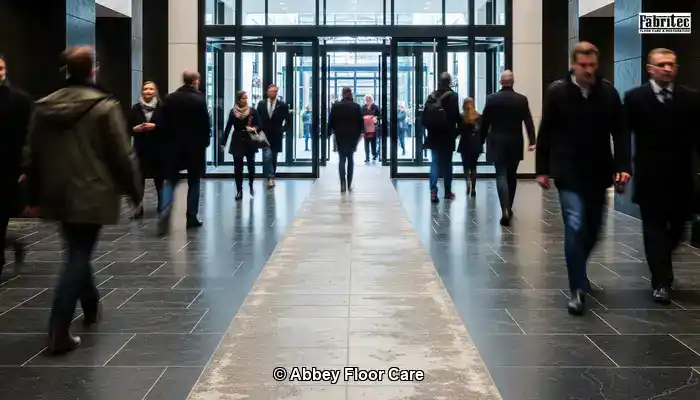
Traffic patterns provide valuable insights, reflecting how the home is utilised. A narrow, pale path from the entrance to the kitchen, a dull patch where chairs are frequently moved, or a grey area near an outside entrance all indicate abrasion and soil movement rather than random staining. Following proper professional restoration, the floor will appear significantly improved, often surpassing its initial condition, as new slate is frequently left unsealed or sealed with unsuitable finishes.
Normal ageing should still allow the floor to maintain a coherent appearance. An older slate floor may become softer in tone, exhibit slightly less contrast, and display more texture variation without signs of loose layers, powdery patches, or rapid darkening after each wash. These stable changes indicate long-term use rather than immediate failure.
Problematic ageing tends to be less predictable. The floor may initially clean up well but then dull again; a patch may darken each time it contacts water; or pale marks may continue to spread in the same high-traffic area. These indicators suggest that the floor’s absorbency, coating condition, surface wear, or moisture behaviour is now influencing its appearance more than standard housekeeping.
Recognising the initial visible pattern is crucial to avoiding incorrect responses. Increasing water usage, employing harsher chemicals, abrasive pads, or steam cleaning can temporarily change the appearance of a faded slate floor while inadvertently pushing moisture, residue, or scratches deeper into the surface. The correct approach starts with understanding what the floor is indicating before assuming that it merely needs more aggressive cleaning.
What Causes Different Slate Floors to React Differently to Similar Care Practices?
Slate is not a uniform material; therefore, two floors can behave differently, even when subjected to the same cleaning and maintenance regimen. Dense Welsh slate typically resists water absorption and wear better, while softer imported tiles may show markings more quickly, absorb moisture more readily, and demonstrate colour changes sooner.
The geological origin of the stone dictates its density, mineral stratification, porosity, and surface reaction. Welsh, Indian, Chinese, and Brazilian slate may all be visually appealing, but their responses to moisture, grit, sealers, and wear differ significantly. A floor that darkens uniformly in one household might remain flat and patchy in another due to the inherent differences in the stone itself.
The natural split texture introduces another level of variability. Ridges and troughs increase the surface area, mechanically trap soil, and affect how colour appears, making it seem deeper or lighter depending on the light’s angle. Understanding the behaviour influenced by the stone’s origin and the characteristics of its riven surface is essential before concluding whether a slate floor is faded, dirty, worn, or simply displaying natural variation.
What Underlying Issues Cause Dull Patches to Reappear Even After Cleaning?
Persistent scrubbing of dull patches can lead homeowners to misidentify the underlying issue when the true cause lies beneath the visible surface of the slate. The floor may appear cleaner for a brief period, only to revert to a flat appearance as residue, moisture, or ingrained soil resurfaces in the same low-lying areas.
Recurring dullness typically indicates that the visible surface does not tell the complete story. Riven troughs, worn traffic lanes, grout edges, and layers of old coatings can trap contamination even after standard mopping has removed loose dirt. More aggressive cleaning may disperse this residue unless the dissolved slurry is thoroughly extracted before it dries back into the texture.
Returning dullness signals an underlying issue, not merely leftover dirt.
Moisture trapped within the fine layers of slate can also result in a cloudy or uneven appearance. The stone’s natural cleavage allows it to split into sheets, but weak boundaries may retain moisture, cleaning residue, and fine soil differently than the tile surface. This is why professional judgement is essential before concluding that more scrubbing is the solution.

How Does the Surface Finish Affect the Safety of Various Cleaning Methods?
The surface finish determines why one slate floor can withstand a specific cleaning method while another may suffer gradual damage. A fine-honed slate floor has a smooth, even surface that diffuses light uniformly, whereas riven slate retains its natural ridges and troughs.
If your slate has a riven finish, it necessitates moisture control, gentle agitation, and extraction rather than aggressive abrasive contact. Steam cleaning poses particular risks, as heat can soften surface sealer films and force moisture into the riven texture and weaker layer boundaries.
If your slate has a topical coating, the cleaning risks shift, as the visible finish may be an old sealer rather than the exposed stone. Harsh alkaline residues, bleach, or repeated wet cleaning can compromise the coating and lead to patchy shine, water marks, or dull traffic lanes.
If your slate has a worn smooth finish, micro-scratching and chemical etching-like dullness can scatter light across the surface. Using the wrong cleaning tool may make the floor appear cleaner temporarily while gradually worsening the faded look.
Why Does Soil Become Embedded in Slate Instead of Simply Resting on the Surface?
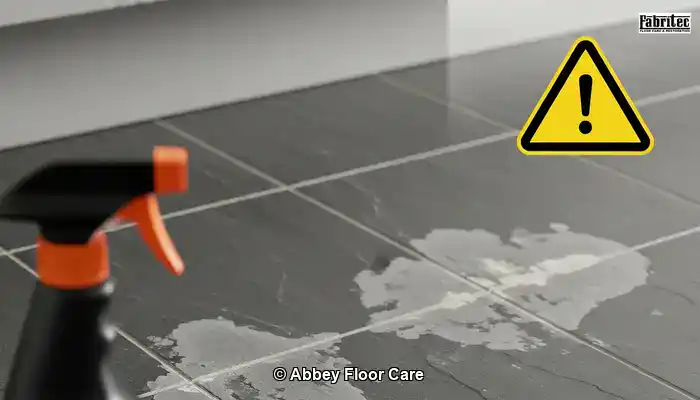
If your slate continues to look tired after mopping, it likely indicates that soil is embedded in the texture, grout edges, and worn low points, rather than merely resting on the surface. The riven texture creates ridges, troughs, open edges, and tiny shaded areas where dirty water can accumulate.
Mechanical soil entrapment results in a slate floor appearing dull, even when the mop water looks clean. Foot traffic forces fine grit into low areas, and porous grout absorbs contaminated wash water adjacent to the tiles. While a rotary machine might be part of professional deep cleaning, the key principle is extraction: any loosened slurry must not be allowed to dry back into the texture.
Worn traffic lanes exacerbate this effect, as raised ridges lose colour first while troughs remain darker. This contrast can make the floor seem uneven, particularly in kitchens, entrances, and older farmhouse-style spaces where outdoor grit is frequently tracked inside.
Why Is It Crucial to Understand Slate’s Responses for Safe Cleaning?
Safe cleaning begins with an understanding of how the slate reacts, rather than solely focusing on the strength of the cleaning product used. Lingering moisture signals the need for water control; returning residue emphasises the importance of rinse quality; and texture that traps soil necessitates appropriate agitation without excessive scrubbing.
Cleansing chemistry can alter appearance alongside removing soil. Strongly acidic or alkaline products may affect colour, degrade sealers, or leave residues that attract dirt. Slate-safe cleaning relies on controlled dwell time, thorough rinsing, and effective extraction, rather than merely opting for a more potent cleaner.
Steam cleaning is a common method that seems gentle but can adversely affect slate. Heat, pressure, and moisture may soften coating films and force water into the riven texture, making routine care better understood through why slate floors can still look tired after cleaning. The slate’s response provides more insight than the product label.
What Factors Cause Some Slate Areas to Darken While Others Remain Flat or Patchy?
Patchy darkening often indicates uneven absorbency, old coatings, or surface wear rather than merely a lack of shine. Slate can respond beautifully to colour-enhancing sealers, but only when the mineral surface is clean, dry, and able to accept the finish uniformly.
If your slate exhibits rich darkening, it suggests that remaining mineral pigments are being activated, and the surface is absorbing the finish consistently. Dense Welsh slate may deepen dramatically with minimal absorption, whereas more porous Indian slate may require careful saturation to avoid uneven tones.
If your slate shows flat or blotchy darkening, it could be due to sealer build-up, contaminated seals, old varnish, metallic polish, or uneven wear blocking the surface. Patchiness serves as a diagnostic indicator: some areas are gaining the finish, while others remain affected by residue, abrasion, or variable porosity.
If your slate displays dark edges and pale centres, it indicates that foot traffic has worn the walking route while the coating has largely survived near the edges. This pattern is commonly observed on older UK domestic floors with residual acrylic sealer around tile peripheries.
Why Are Flaking, Whitening, and Loose Layers Not Always Indicators of Cleaning Problems?
Flaking and whitening signal potential issues that can be misinterpreted as dirt when the slate is actually demonstrating surface degradation or trapped moisture. Loose layers, powdery patches, and lifting edges do not behave like regular soil; the issue extends beyond the surface itself.
Layer separation follows the natural composition of slate. Fine mineral sheets tend to split along cleavage planes; weaker boundaries in softer stone might separate under moisture, impact, freeze-thaw stress, or prolonged neglect. This phenomenon, known as delamination, should not be mischaracterised as general fragility; properly maintained slate remains a durable flooring option.
Setting realistic expectations is crucial where layers have started to lift. Cleaning may improve the appearance of surrounding areas, but separated sheets, deep structural fissures affecting surface integrity, or active moisture movement require stabilisation or repair assessment before addressing visible appearance. The floor will significantly improve after appropriate intervention, but loose layers cannot be resolved through repeated washing alone.
How Can You Achieve Effective Slate Care Through Moisture, Grit, and Routine Management?
Long-lasting slate durability stems from managing daily conditions that gradually alter the floor: grit, moisture, residue, and habitual practices. Removing grit before wet mopping protects raised riven edges from abrasion, helping to mitigate the pale traffic-lane effect.
Correct ongoing maintenance is essential for helping slate retain its colour, remain easier to clean, and prevent residue accumulation in texture and grout. Using pH-neutral cleaning products, limiting water, quickly addressing spills, and resealing at appropriate intervals are more crucial than pursuing shine with stronger cleaners. The most significant factor in extending the floor’s life is maintaining proper ongoing practices—pH-neutral cleaning, grit removal prior to wet mopping, and timely resealing.
Avoid steam cleaning, as heat and moisture can soften surface films and force water into textures, joints, and weak layers. A worn slate floor necessitates controlled moisture management rather than excessive moisture exposure. Practical maintenance routines are discussed in cleaning and sealing a slate floor, where care aligns with the stone’s behaviour.
When Should You Investigate Issues Beyond What Cleaning Can Resolve?
If cleaning consistently yields poor results, the floor has likely moved from routine maintenance to a diagnostic phase. Recurring dullness, uneven colour, whitening, flaking, rapid darkening from water exposure, or patchy sealer performance indicate that the visible surface is only part of the issue.
- Observe whether dullness returns in the same traffic lane after the floor dries.
- Look for uneven darkening in areas where some tiles absorb water more quickly than others.
- Check for signs of whitening, powdery patches, or loose layers that remain unaffected by cleaning.
- Compare the paler centres with darker edges, particularly where old coatings may persist.
- Monitor whether grout becomes soiled quickly due to contaminated wash water settling into the joints.
Repeated failures after cleaning indicate that surface wear, coating residue, moisture behaviour, or layer separation are at play rather than inadequate housekeeping. Before attempting another stronger cleaner, it is vital to set realistic expectations, as the explanation must align with the material condition prior to selecting any restoration path.
What Steps Should You Take Once You Understand Your Slate Floor’s Signals?
Once the underlying cause becomes clearer, the next step involves selecting the appropriate course of action instead of repeating the same cleaning, sealing, or restoration assumptions. A floor that merely retains soil within its texture requires a different approach than one with failed coatings, loose layers, moisture stains, or patchy absorbency.
Cleaning guidelines pertain to cleaning limits, coating behaviours relate to sealing procedures, visible damage falls under repair protocols, and long-term care is associated with routine maintenance management. A broader understanding of material context is provided in slate floors in UK homes, explaining how slate behaves over time, how finishes impact care, and why diagnosis should precede treatment.
Grasping the cause safeguards the floor against inappropriate responses. A precise interpretation of colour, texture, moisture, and layer behaviour enables more accurate decision-making, helping the slate regain clarity without sacrificing its natural character.
Essential Recommendations for Maintaining Your Slate Floor
Recommended products for maintaining slate:
Cleaning solutions: Fila Pro Floor Cleaner, LTP Floorshine.
Equipment: Vileda H2PrO Spin Mop System.
David Allen — Abbey Floor Care
David Allen has over 30 years of experience working with slate floors throughout the UK at Abbey Floor Care. His practical expertise regarding material behaviour, restoration sequencing, and long-term floor maintenance informs every article published under the Abbey Floor Care banner.
The Article Problems With Slate Floors Start Inside The Stone first found on https://www.abbeyfloorcare.co.uk
The Article Slate Floors: Uncovering Internal Issues Within the Stone appeared first on https://fabritec.org
The Article Slate Floors: Revealing Hidden Issues in the Stone Was Found On https://limitsofstrategy.com
No responses yet